French song · Folk · AcousticFranceSelf-taught · Songwriter
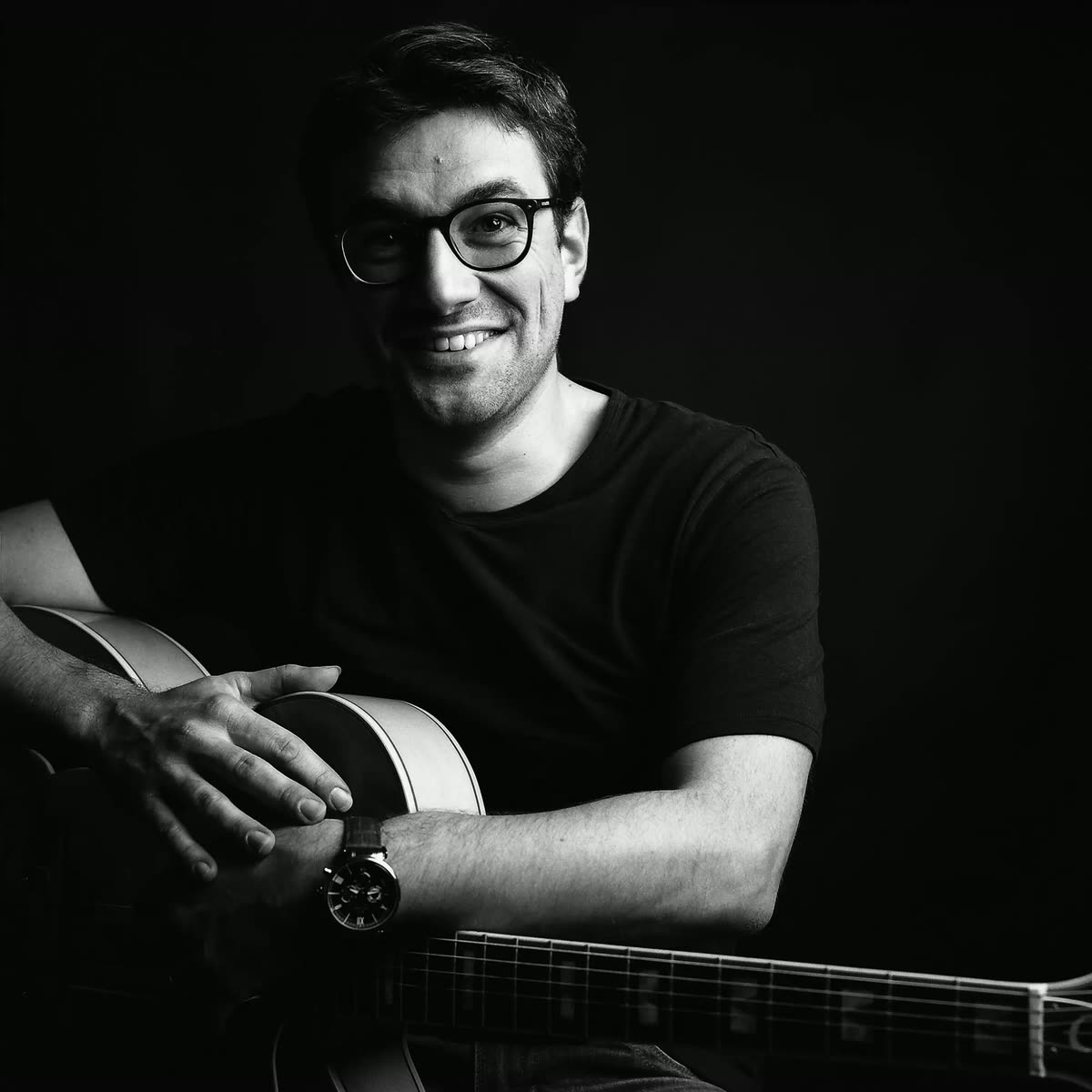
He writes songs in the time left between architecture and raising two daughters, plays instruments he mostly taught himself, and, together with his wife, created a small handmade world where those songs could live.
Three things, all from the same place. That is the most accurate map of this page: the songs, the little fabric world that acts them out, the album covers that dress them. None of it came from a label, a school or a studio with a receptionist. It came from home, from curiosity, and from the time that was left over.
Two lives
The hours that are left
Löhstana David is not a full-time musician, and he has never pretended to be one. His working days belong to architecture. Music lives in the margins of the week — margins that grew noticeably thinner once his two daughters arrived.
In 2006 he made a quiet decision that turned out to have a very long tail: he began putting his songs on Jamendo under Creative Commons licences, free to hear and free to download. Two decades on, that open door counts more than four hundred tracks.
It would be easy to draw a neat line between designing buildings and building songs — structure, proportion, rooms people end up living in. He is not one for neat conclusions, though. By his own account, doubt has always been his natural state.
Projet
Chansons, textes, images
Échelle
1 : 1
Atelier
Le temps qui reste
Dessiné par
L. David
← 1 : 1 →
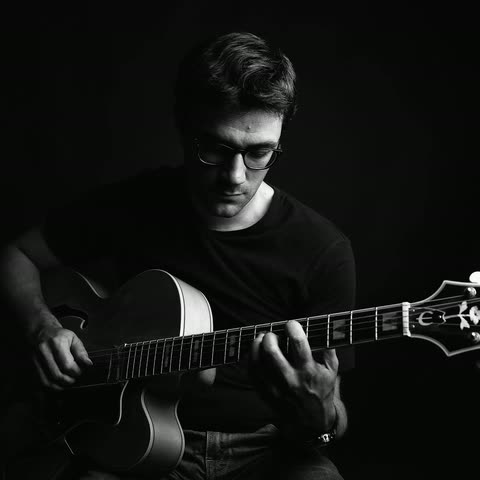
The guitar — the thread that runs through everything he writes
By ear
Instruments he never formally learned
No conservatoire, no teacher, no method book. He collects instruments the way other people collect postcards, and he plays most of them the way you find your way around a new city: by walking it, getting a little lost, and remembering what was beautiful.
He is honest about what that costs him — and about what it gives back. He tells it better himself, in the second question of the interview below.
N° 01
Guitar
Where nearly every song starts.
N° 02
Banjo
Recorded on Sophie Maurin’s album “7”.
N° 03
Mandolin
Same album, same method: ears first, theory never.
N° 04
Harmonica
Heard on Julien Fumaz’s recordings.
N° 05
Bouzouki
It even has a track named after it: “Bass & Bouzouki”.
The workshop
A world made by hand
Somewhere between the songs, he built a second studio — a miniature one. A woollen musician with round glasses and a checked jacket. A mixing desk the size of a matchbox. A gramophone, a red carpet, one warm lamp. His wife made the characters; the two of them did everything else, one frame at a time.
Stop-motion is a brutal craft for a crew of two: hours of patience for seconds of film. What exists — two short films and the little loops below — is some of the most personal work he has put into the world.
behind the camera
rehearsing, alone, on the red carpet
a whole band, one musician
the last record of the night
Planté làStop-motion · 6:08 · 2017
The fuller of the two films: a song, a handful of puppets and a set built at table height. The French site Le Monde du Stop Motion featured it in 2017.
MécamusiqueStop-motion · 5:36
From his archive
The stage years
Before the home studio there were rooms full of people: concerts with La Gouaille, La Queue du Lézard and Julien Fumaz, and a tour across France and Germany with the alternative punk-rock band Sidharta. The photographs below come from his own archive.
Tap a photo to see it larger
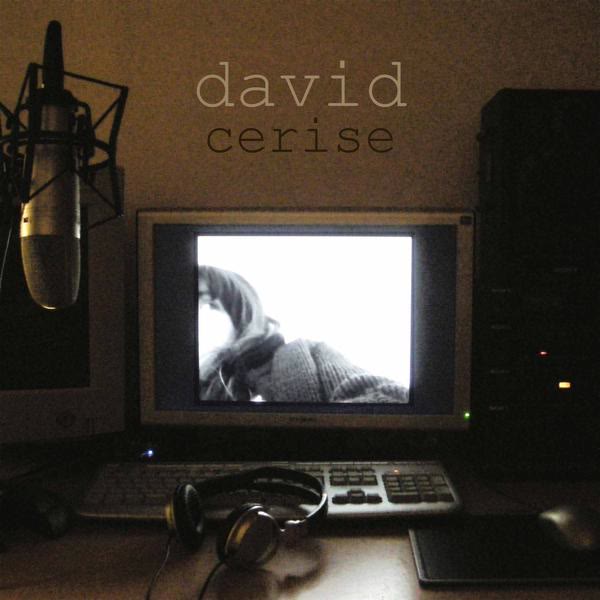
cerise · album · 2008
The song
Cerise
Cerise means cherry. In 2008, the song gave its name to a whole album — cerise, whose cover shows a home studio at night — and this version is the one that closes it, track ten of ten. Like everything else he makes, it went straight onto Jamendo, free. It is called the “short version”, which in his world still means a generous five minutes and nineteen seconds.
It is sung in French, and you don’t need to understand French to follow it: the arrangement carries the story. There is also an instrumental version, for anyone curious to hear what remains when the voice is taken away.
One more thing before you press play: this song is eighteen years old. At the end of the interview, he says what he would hope a stranger might feel upon finding one of his recordings twenty years from now. “Cerise” has already travelled most of that distance.
On FMV FIT Radio
“Cerise” (version courte)
Löhstana David
0:00 / 5:19
From the album “cerise” · 2008 · listening only · with the artist’s permissionLoading…
The song cannot be loaded right now. You can also hear Löhstana David in the FMV FIT Radio rotation.
A sound to keep
Voices on a MiniDisc
Decades ago, at family meals, he would leave a MiniDisc recorder running on the table. Nothing staged: just the family around the table, as it really sounded. A few fragments from those recordings later found their way into one of his songs, “Souvenirs”.
Today, the voices he most wants to keep are those of his daughters. His younger daughter, Taïssia, already has a song that carries her name — his 2024 single, whose cover shows a plush toy on a swing.
Souvenirs
REPAS DE FAMILLE · MD 74
Interview
In conversation with Löhstana David
Eight questions: the man away from the music, learning without rules, the fading hunger for new songs — and the one sound he would keep forever.
01If we took music completely out of the conversation for five minutes, who is David?
I make music in my spare time, which has become increasingly scarce since the birth of my daughters. Alongside that, I work in architecture.
02You describe yourself as self-taught. Is there something you learned “incorrectly” because nobody taught you the rules, but which eventually became part of your own way of creating?
I think I am self-taught more out of laziness than anything else. I struggle with academic learning, and I sometimes regret that because I lack a great deal of theoretical knowledge that could enrich my compositions.
On the other hand, perhaps this makes me more receptive to accidents and to the slightly magical side of creation. This lack of theoretical knowledge may allow me to be more easily amazed when a melody emerges.
The same is true of every instrument I tinker with. For example, I play the banjo or mandolin without really knowing the fretboard or remembering the chords.
03When you remove the voice, do you ever discover something in the music that you had not noticed while writing the song?
Not much, to be honest. On the contrary, I sometimes find the instrumental versions a little boring because the pieces were not composed for that purpose. So I occasionally add an instrument to take over the vocal melody or bring something else to the track.
04When nobody is listening, what kind of music do you put on for yourself, or do you sometimes prefer no music at all?
I listen to less and less music. It is disheartening, but I grow tired of it increasingly quickly. That is also one of the reasons why I record much less than I used to.
I notice with nostalgia that the emotions experienced during adolescence lose much of their intensity with age. Music is part of that. Sadly, the major discoveries that once transformed my ears seem to be behind me.
Every now and then, I still discover an enjoyable song that I can listen to ten or twenty times, and then I grow tired of it. So I return to the songs of my youth to recover, for a few seconds, that lost pleasure. And then I grow tired of them again…
05What can you express through an image or an object that you cannot express through a song?
Stop-motion videos allow me to create an additional atmosphere, something that probably resembles me even more closely than my music does.
I loved making those videos, but the workload is too intense for only two people — including my wife, who made the characters. I wish I could have devoted much more time to them. Perhaps then I might have been reasonably satisfied with the result.
06What is something you have changed your mind about as you have grown older?
I do not really feel that I have changed my mind very much, because I have always doubted everything. I still realise that I lack far too much knowledge to hold an informed and definitive opinion on many subjects. And on the things that matter most, I believe I have kept my convictions.
07If you could preserve one sound from your life forever, what would it be, and why?
The voices of my children, of course. This reminds me that I absolutely must record my younger daughter. I recorded her older sister, but not Taïssia yet. I naturally have videos containing her voice, but it is not the same.
I also recorded the voices of my family on various occasions, especially during family meals, using a MiniDisc recorder. A few excerpts can be heard in my song “Souvenirs”. Hearing those voices again several decades later is deeply moving every time.
08Twenty years from now, if someone accidentally discovers one of your recordings without knowing anything about you, what would you hope they feel?
I would hope that the music takes them back into their own life twenty years earlier.
2046
Twenty years from now
Somewhere, a stranger presses play.
They know nothing about an architect in France, a woollen puppet with round glasses, or a MiniDisc recorder left running at dinner. They only hear a song. If “Cerise” has been playing while you read this page, notice where it took you — that, more or less, is everything he hopes for.
Where to find Löhstana David
His whole catalogue is open on Jamendo, and he is on every major platform. You can also hear him here, in the FMV FIT Radio rotation.